Offa's Dyke Trees | Fine Art Tree Photography by Charles Sainsbury-Plaice
Walking with Family and Trees Along Offa's Dyke
Why Britain's Ancient Trees Deserve to be Seen as Works of Art
By Charles Sainsbury-Plaice
The first thing that caught my eye was not the view. It was a solitary hawthorn standing proudly above the valley. Twisted by decades, perhaps even centuries, of wind, frost, drought and the continual browsing of sheep, it looked more like a sculpture than a tree. Charlotte and Bertie continued along the path while, almost instinctively, I unpacked my Hasselblad X2D. For the next twenty minutes I photographed a tree that many walkers would probably have passed without a second glance.
That is the difference between walking with a photographer and walking with someone who simply carries a camera. After more than twenty years photographing Britain's most remarkable trees, I have learnt that every veteran tree has a story waiting to be discovered.
There are few better ways to spend a summer's day than walking through the Welsh Marches with family. My wife Charlotte, one of our four children, Bertie, and I recently walked the Offa's Dyke Path between Knighton and Kington. While they enjoyed the challenge of the miles beneath their boots, I found myself doing what I have done for much of my professional life, slowing down every few hundred yards to admire another remarkable tree. What should have taken a spritely walker 5.5 hours turned into 8 hours!
As a professional countryside, environmental and tree photographer, I have been fortunate to spend over two decades documenting some of Britain's most remarkable trees. My work has been exhibited at Sotheby's as part of The Queen's Green Canopy project and published in the official book The Queen's Green Canopy, celebrating seventy Ancient Trees and seventy Ancient Woodlands to mark Her Majesty Queen Elizabeth II's Platinum Jubilee. I also work regularly with the Woodland Trust, using photography to tell the story of Britain's extraordinary arboreal heritage and the vital role trees play in our landscapes.
For this walk I carried my Hasselblad X2D together with a selection of XCD lenses. The extraordinary resolution and tonal range of the system allow me to photograph trees not simply as features within a landscape, but as individual living works of art, revealing every fold of bark, every weathered limb and every shaft of light filtering through ancient woodland.
Every tree has its own character.
Every ancient woodland has its own atmosphere.
Every landscape tells its story through the trees that have shaped it.
This walk was no exception.
A Landscape Written by Trees
The ridge between Knighton and Kington offers some of the finest views along this section of the Offa's Dyke Path and beyond.
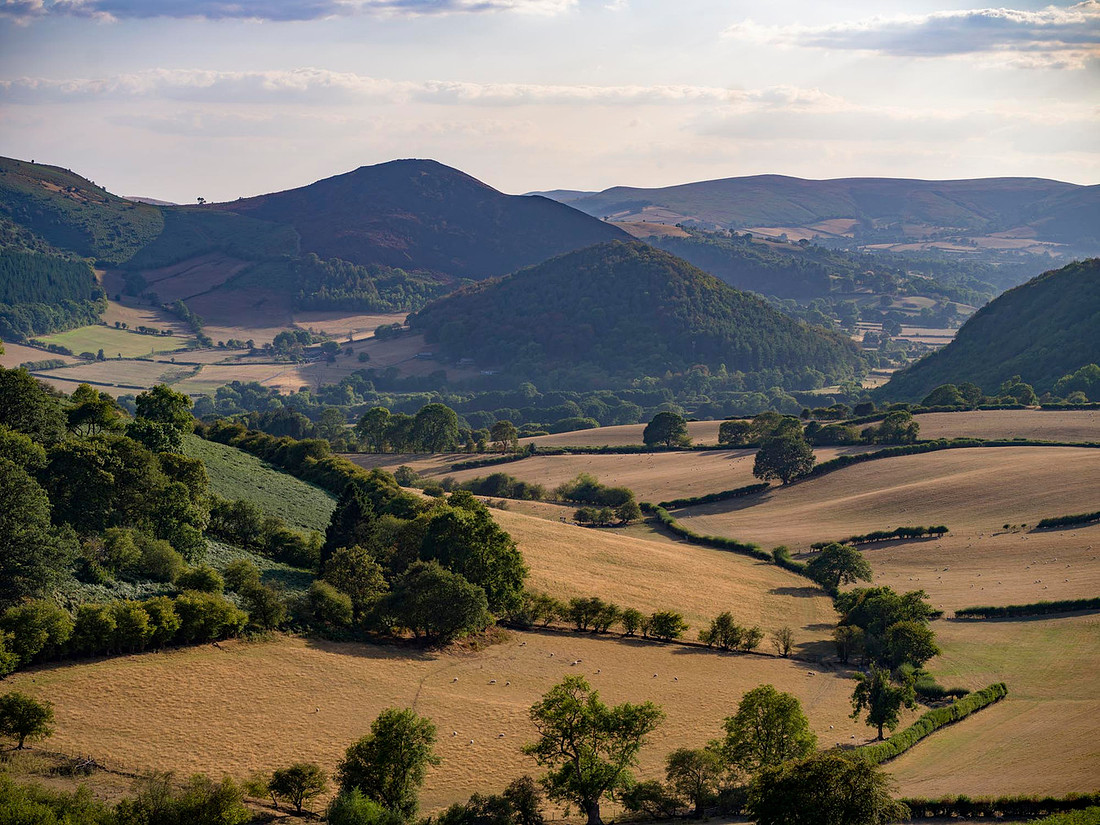

Looking across rolling hills, patchwork fields and wooded valleys, it becomes obvious that trees are far more than decoration. Hedgerow oaks, ash trees climbing steep valleys, veteran hawthorns clinging to exposed ridges and scattered woodlands together define the character of the Welsh border country.
Remove the trees and much of what makes this landscape beautiful disappears with them.
Their roots hold the soil together. Their canopies soften the skyline. Their presence connects centuries of farming, wildlife and human history.
The weather could hardly have been better. A deep blue sky, scattered white clouds and warm late summer sunshine illuminated the landscape. Yet the prolonged dry spell was equally apparent. The hillsides were golden, the grasses crisp beneath our feet and the fields carried the unmistakable colours of a countryside thirsty for rain. Against that backdrop, the trees stood out all the more, islands of green resilience in an increasingly parched landscape.
The Veteran Hawthorns
Perhaps the greatest surprise of the day were the hawthorns.
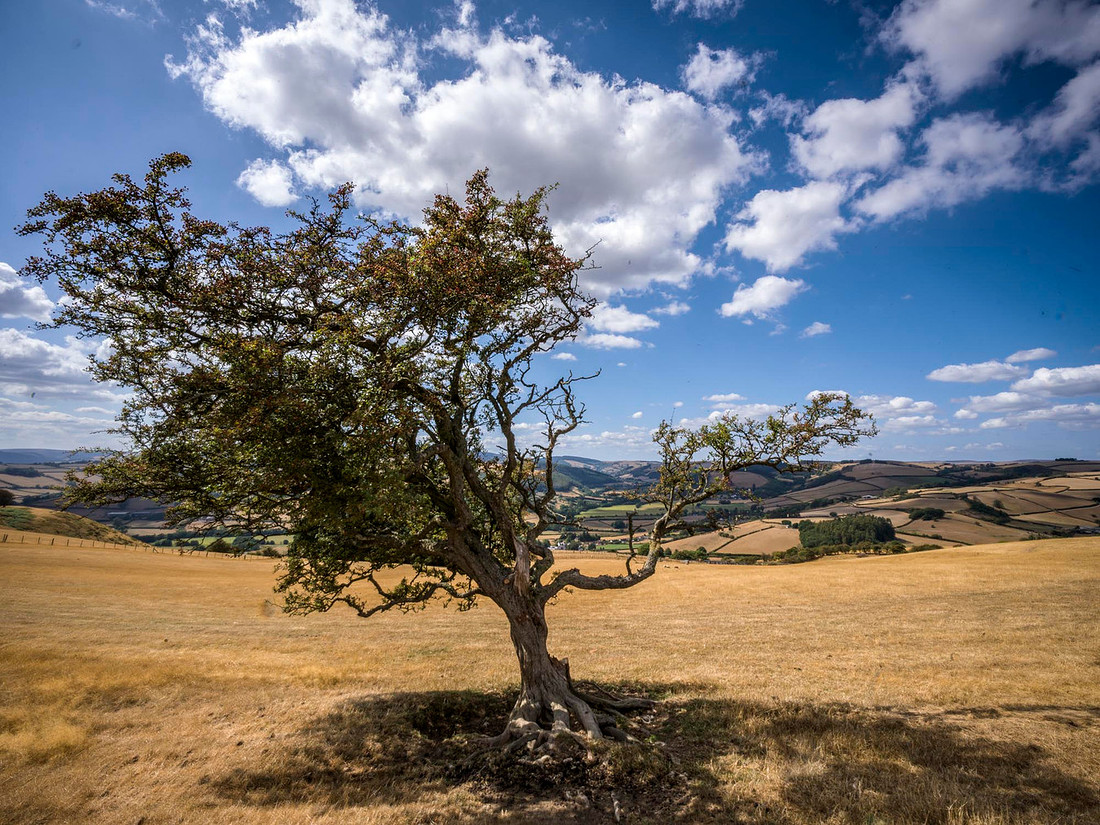
Standing alone on exposed hillsides, many have clearly endured decades, perhaps even centuries, of relentless wind, frost, drought and the continual browsing of sheep. Their trunks have twisted into extraordinary natural sculptures while their branches reach skywards in forms that no artist could ever invent.
These are not neglected trees.
They are veteran trees in every sense, shaped by weather, grazing animals and time itself.
As a photographer, I find trees like this endlessly fascinating because they possess something impossible to manufacture.
Character.
Every scar records another winter survived.
Every hollow has become home to insects, fungi or birds.
Every twisted limb tells another chapter in an extraordinary life.
Giants of the Woodland
Further along the ridge we encountered magnificent veteran oaks.
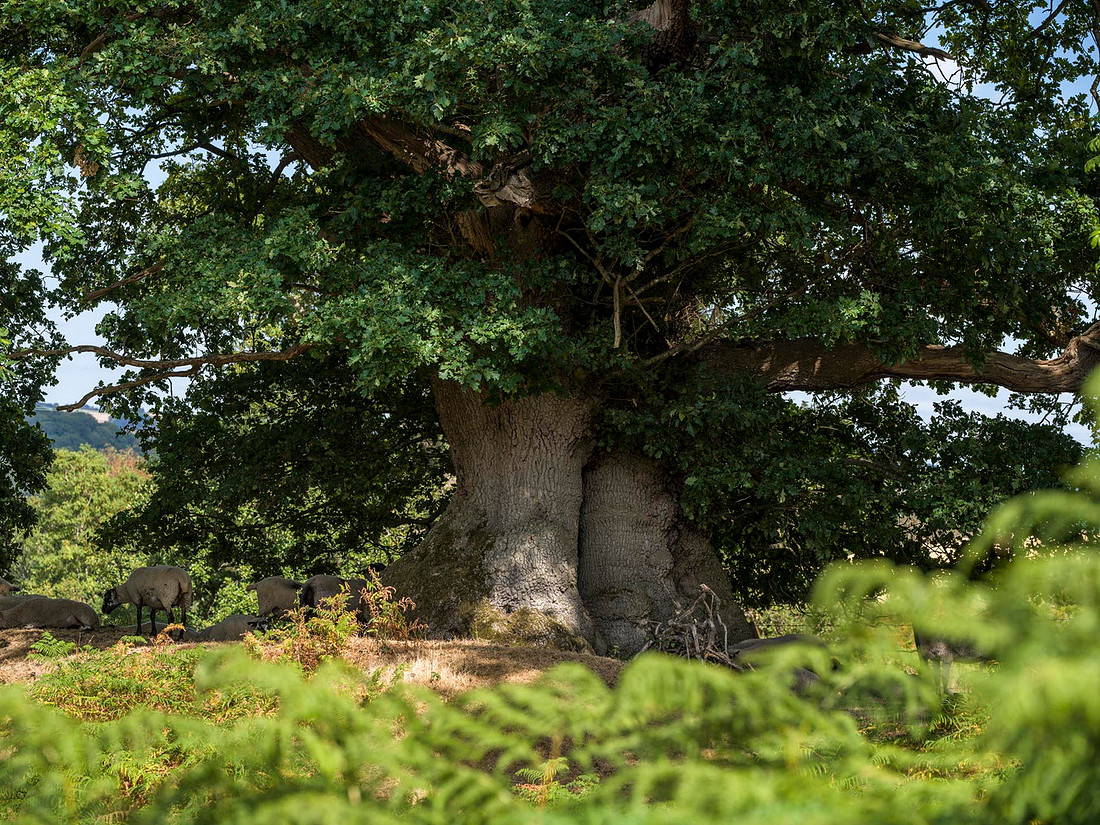
Some possessed enormous hollow trunks. Others spread vast limbs across the woodland floor, creating entire ecosystems beneath their canopies. Mosses, lichens, fungi, insects, bats and birds all depend upon these ancient living structures.
These trees are not simply old.
They are among Britain's richest habitats.
The older an oak becomes, the more valuable it often becomes to wildlife.
Standing beneath them reminds us how insignificant our own lifetimes really are.
Some may already have been mature when generations of travellers crossed these hills long before the modern walking trail existed.
Ash, Field Maple and Reasons for Optimism
One of the most encouraging sights was the number of magnificent ash trees.
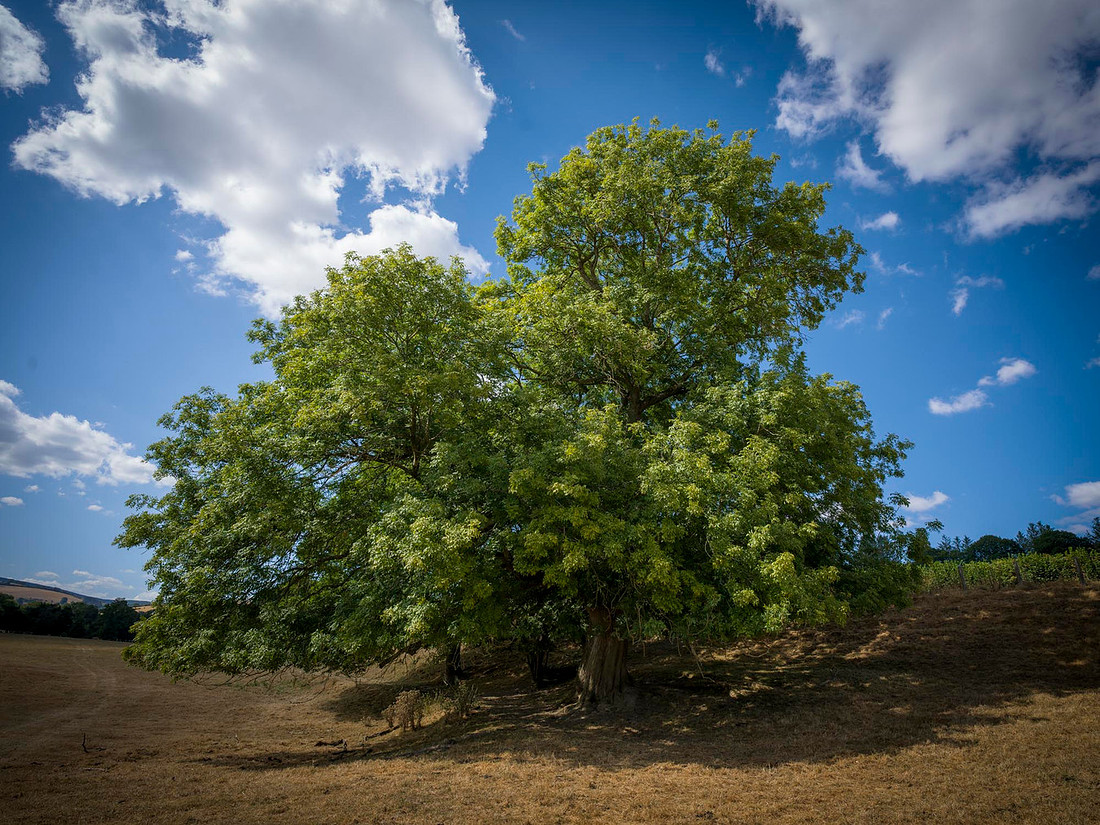
Across much of Britain, ash dieback has transformed familiar landscapes, yet here many mature specimens appeared healthy, vigorous and full of life. Whether these individuals possess some form of resistance to the disease or have simply escaped infection remains to be seen, but seeing them flourishing offered genuine optimism.
Equally striking were the beautiful field maples, one of Britain's most understated native trees. Rarely the largest or oldest species, they nevertheless contribute enormously to our hedgerows and ancient woodlands, providing exceptional autumn colour and supporting a remarkable diversity of insects and wildlife.
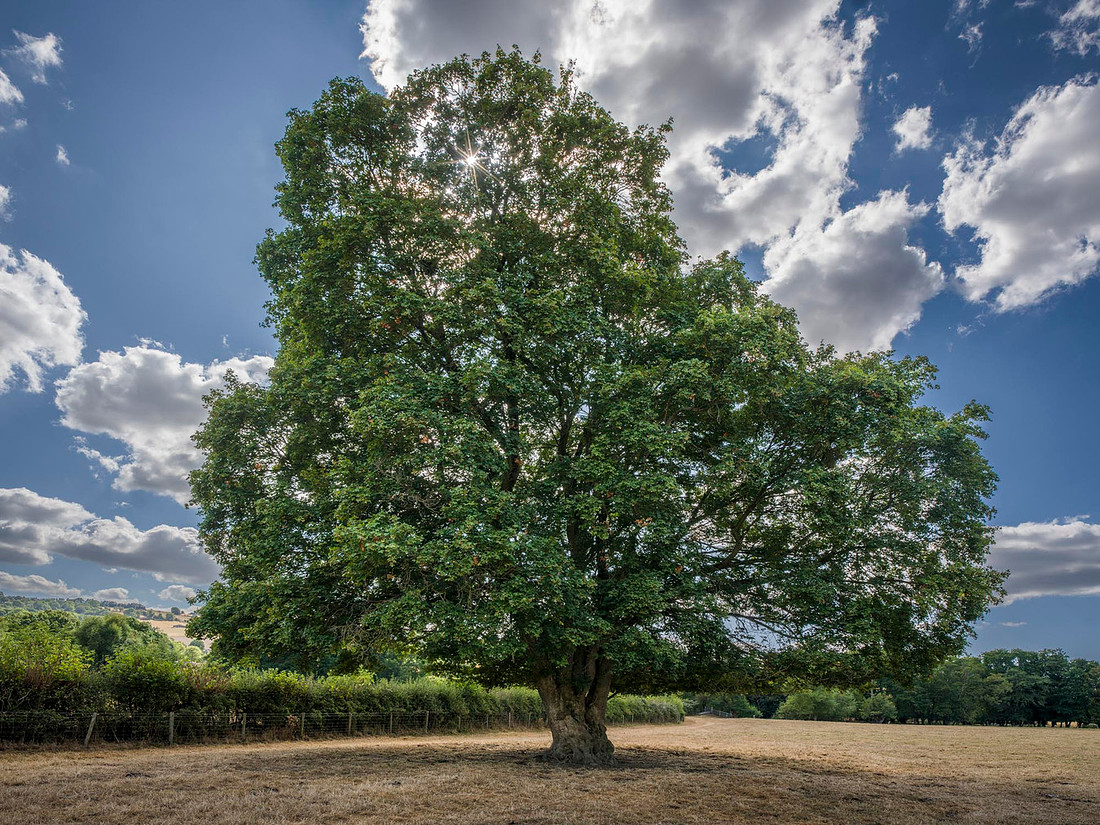
It is often the quieter species that help define the character of a landscape.
Granner Wood and the Woodland Trust
One particularly encouraging moment came as we entered Granner Wood, cared for by the Woodland Trust.
Having worked with the Woodland Trust on a number of projects over the years, it was especially rewarding to see first hand the careful restoration taking place here.
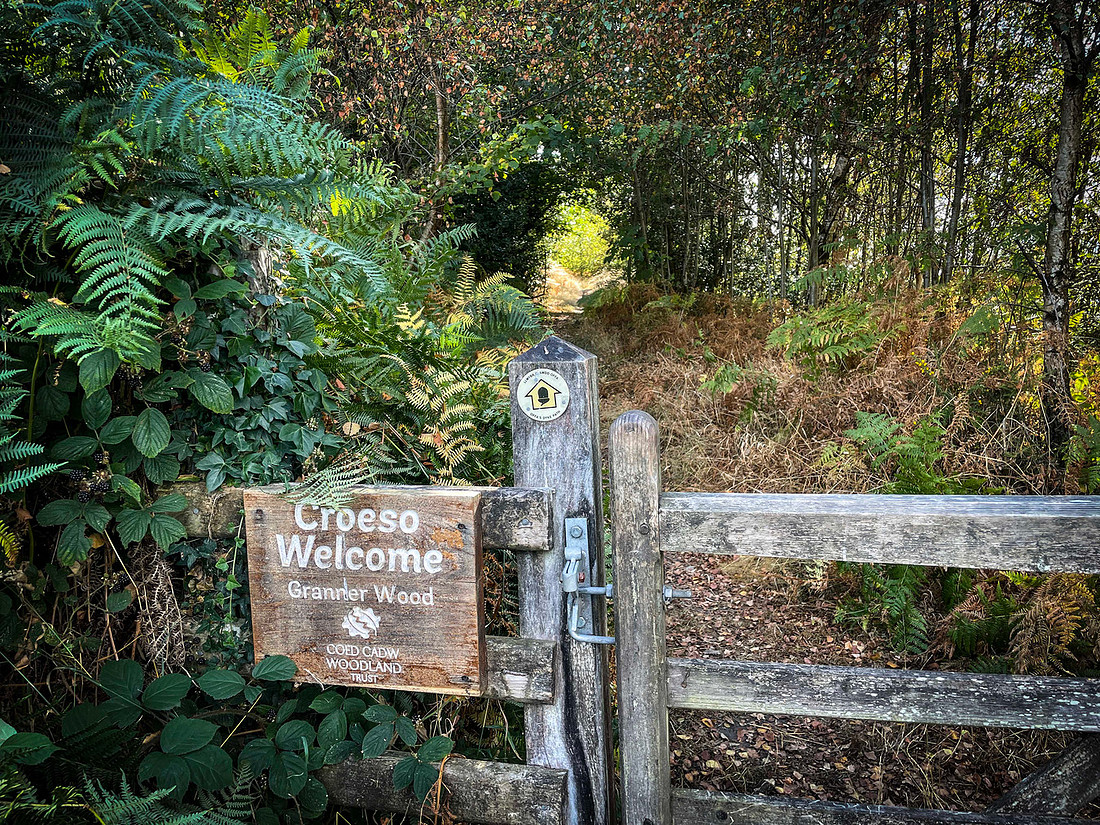
Like many woods across Britain, parts of Granner Wood were planted with conifers during the twentieth century. Today those areas are gradually being restored towards native broadleaved woodland, allowing ancient woodland habitats to recover.
Woodland restoration rarely attracts the same attention as planting new forests.
Yet restoring ancient woodland is every bit as important.
Ancient woodland cannot simply be recreated. It represents centuries of uninterrupted ecological continuity. Once lost, it is effectively irreplaceable.
Protecting what survives is one of the greatest gifts we can leave future generations.
Trees Are More Than Beautiful
Trees are often admired simply because they are beautiful.
But they are so much more.
They clean the air we breathe.
They capture and store carbon.
They cool our towns and countryside.
They reduce flooding.
They stabilise fragile soils.
They support thousands of species of plants, insects, birds and mammals.
They make our landscapes more resilient.
As our climate becomes warmer and increasingly unpredictable, trees face mounting pressures from prolonged droughts, heatwaves, flooding, storms, invasive pests and emerging diseases. Alongside these natural challenges come human pressures, where short term commercial interests can all too easily outweigh the immense environmental, cultural and historical value of mature trees and ancient woodland.
No amount of tree planting can replace a veteran oak or an ancient woodland that has taken centuries to develop.
Every ancient tree we lose is the loss of an entire living ecosystem.
Photographing Trees as Works of Art
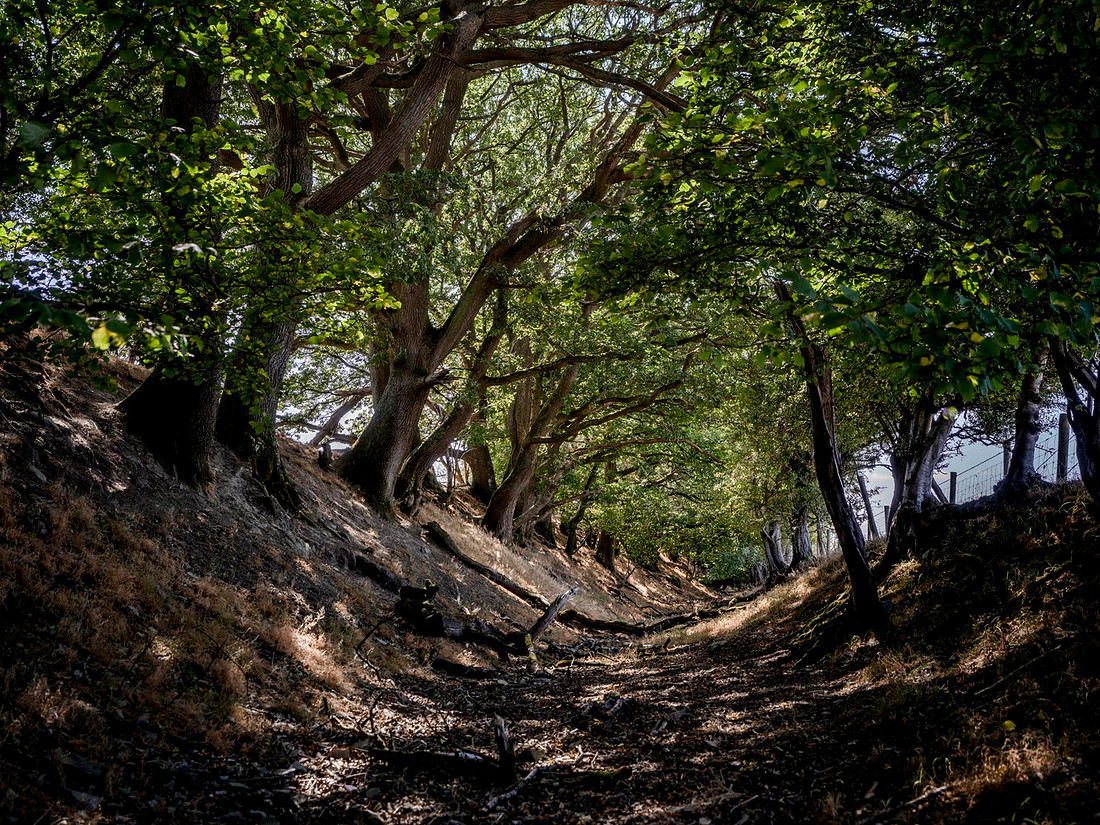
People often ask why I devote so much of my photography to trees.
The answer is simple.
To me they are among Britain's greatest works of art.
Over the past two decades I have photographed trees across Britain, from the ancient yews of Welsh churchyards and the mighty oaks of historic estates to windswept hawthorns clinging to upland ridges, the iconic beeches of Watership Down and many of Britain's most celebrated veteran trees.
In 2022 I was commissioned, alongside fellow photographer Adrian Houston, to photograph seventy Ancient Trees and seventy Ancient Woodlands across the United Kingdom for the official Queen's Green Canopy project, created to celebrate Her Late Majesty Queen Elizabeth II's Platinum Jubilee. The resulting photographs were exhibited at Sotheby's in London before being published in the official book The Queen's Green Canopy, for which His Majesty King Charles III wrote the foreword.
That experience reinforced something I have long believed.
Britain's greatest natural monuments deserve to be appreciated in exactly the same way as great architecture, sculpture or painting.
No sculptor can match the elegance of a veteran beech.
No architect could design the complexity of an ancient oak.
No painter could invent the patterns of sunlight filtering through a mature woodland.
Photography allows us to preserve these moments, not simply as records, but as portraits of living individuals whose stories continue to shape our landscapes.
My hope is that these photographs encourage people to slow down, look more closely and perhaps discover their own favourite tree.
Because conservation rarely begins with legislation.
It begins with affection.
Only when people value something do they truly begin to protect it.
Sharing a Love of Trees
Perhaps my favourite memory of the day was not one particular photograph.
It was sharing these remarkable trees with Charlotte and Bertie.
They came for the walk.
I came for the trees.
By the end of the day I think we all came away with a little of each other's enthusiasm.
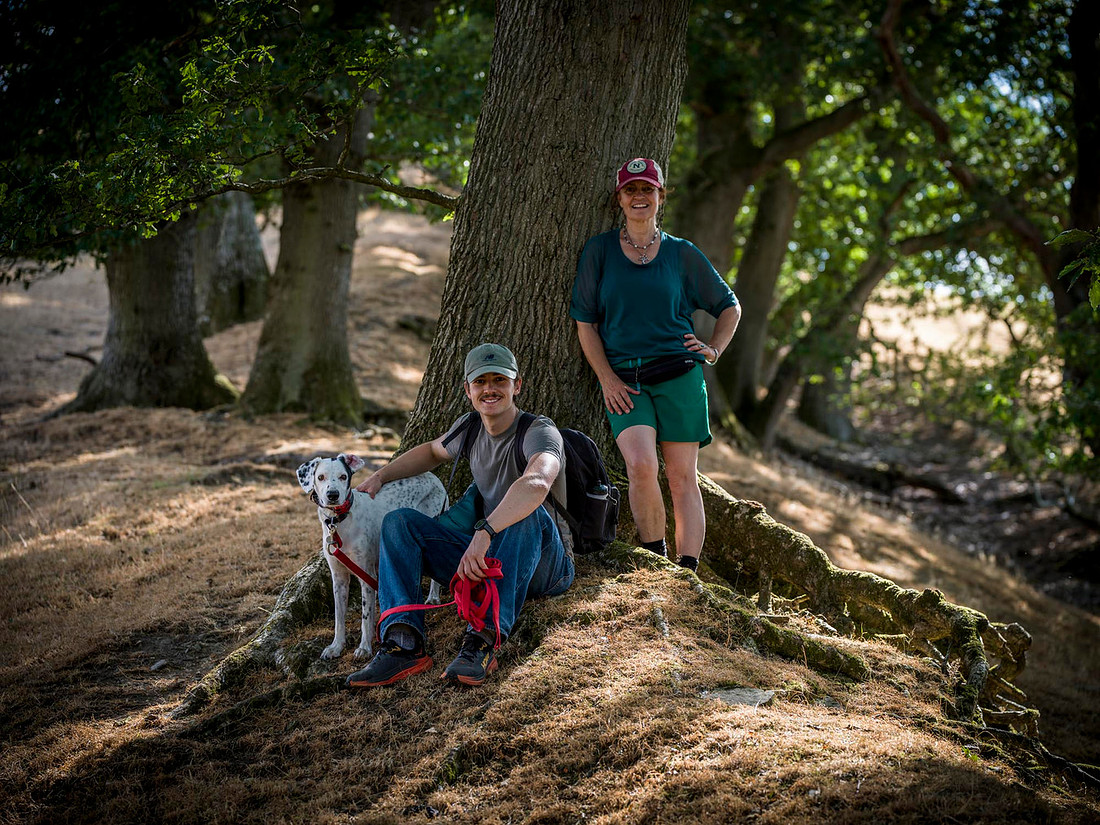
That, perhaps, is one of the greatest gifts we can pass on to future generations.
Not simply a love of walking.
Not simply a love of trees.
But an understanding that Britain's landscapes are richest when families spend time together outdoors, discovering the natural world one path, one woodland and one remarkable tree at a time.
If these photographs encourage even a handful of people to pause beneath an ancient oak, notice a veteran hawthorn on a hillside or spend a little longer wandering through an old woodland, then they have achieved exactly what I hope my photography can do.
Trees are not simply part of the landscape.
They are the landscape.
They are living monuments to Britain's natural history, shaping the places we love, sustaining the wildlife around us and quietly providing the air we breathe.
For me, there can be no greater privilege than telling their story through a camera. And on a beautiful walk along Offa's Dyke, shared with family, I was reminded once again why they remain among the most inspiring subjects any photographer could hope to encounter.
About the Author
Charles Sainsbury-Plaice is a British countryside, environmental and royal photographer specialising in ancient trees, woodland landscapes and Britain's living natural heritage. His photographs formed part of The Queen's Green Canopy project, were exhibited at Sotheby's, and published in the official commemorative book The Queen's Green Canopy. He works regularly with the Woodland Trust and other conservation organisations, using photography to promote biodiversity, climate resilience and appreciation of Britain's remarkable trees. Working primarily with the Hasselblad X2D system, his fine art tree photography seeks to portray Britain's ancient trees as living works of art.
